
The Blueprint of the Beast: Why Your Environment Dictates Your Humanity
Introduction
On a freezing morning in 1546, inside the stone courtyard of Rawat Fort, a father and sixteen of his sons were systematically slaughtered.
Sultan Sarang Khan, the fierce chieftain of the Gakhar warrior clan, lay dead alongside his children. He wasn’t a bad father. By all historical accounts, he loved his sons dearly. Yet, he marched them directly onto the front lines of a hopeless battle, knowingly sealing their deaths.
A century later and a few hundred miles away, Emperor Aurangzeb did something even more horrifying. He locked his aging father in a room for life, hunted down his older brother Dara Shikoh, paraded him through the dirt streets of Delhi in chains, and had him executed.
When we read these dark pages of history, our modern minds instantly look for a villain. We point at Aurangzeb or the brutal realities of medieval warfare and label them as monsters. We comfort ourselves by believing that human beings are neatly divided into two distinct boxes: the naturally cruel and the naturally compassionate.
But history is hiding a far more uncomfortable truth.
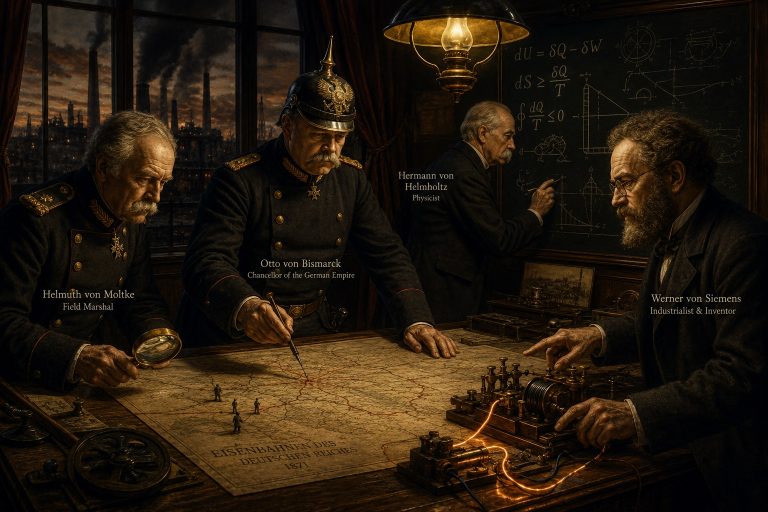
Aurangzeb, Sarang Khan, and the countless tyrants of the ancient world weren’t born with defective moral compasses. They were chameleons navigating a meat grinder. They were creatures of a broken system.
The Zero-Sum Cage
Imagine growing up in a world where the rules of succession are governed by a single, unwritten law: Ya Takht, Ya Takhta—Either the Throne, or the Burial Bier.
In the Mughal and Ottoman empires, there was no law stating that the eldest son automatically inherits the kingdom. Every single prince was given an army and a province. When the king died, it was a literal race to the capital. If you won, you became the supreme ruler. If you lost, you were executed, or had your eyes permanently pierced with a hot iron needle.
Now, ask yourself: If you were a prince in that environment, what would you do?
If you chose to be gentle, merciful, and collaborative, your brothers wouldn’t throw you a banquet. They would still view you as a threat to their throne and execute you to secure their own safety. In a hyper-competitive, zero-sum environment, mercy isn’t a virtue—it is a suicide note.
The tyrant’s cruelty rarely stems from pure malice; it stems from a pathological, environment-driven fear of losing control. When a system forces a binary choice between becoming a monster or becoming a victim, human psychology will choose survival every single time.
The Stanford Basement and the Corporate Ladder
It is easy to look at medieval kings and think, “Well, that was the past. We are civilized now.” But modern behavioral psychology proves that the exact same wiring governs us today.
Look no further than the infamous 1971 Stanford Prison Experiment. Researchers took perfectly ordinary, healthy, empathetic college students and randomly assigned them roles as “guards” or “prisoners” in a mock basement jail. Within days, the “guards” began exhibiting shocking levels of sadism, while the “prisoners” suffered severe emotional trauma. The individuals hadn’t changed—the micro-environment completely overrode their natural moral wiring.
We see this play out in modern corporate boardrooms too. In the early 2000s, many massive tech companies adopted a system called “Stack Ranking” (or “Rank and Yank”). Managers were forced to grade their employees on a rigid bell curve and fire the bottom 10% every single year.
The result? An environment that looked strikingly like a corporate Mughal court. Employees actively hid information from each other, sabotaged their teammates, and refused to collaborate. Why? Because helping your coworker succeed meant putting your own financial survival at risk. The system was engineered to breed paranoia.
Architects of Collaboration
Conversely, look at what happens when the environment changes.
In Buddhist folklore, the famous Vyaghri Jataka tells the story of a Bodhisattva who encounters a starving tigress about to devour her own cubs. Overcome by pure empathy, he throws himself off a cliff to feed the animal and save the youth. It represents the absolute peak of Dana—unconditional, radical self-sacrifice.
How do we bridge the gap between the prince who strangles his brother and the prince who feeds himself to a tiger?
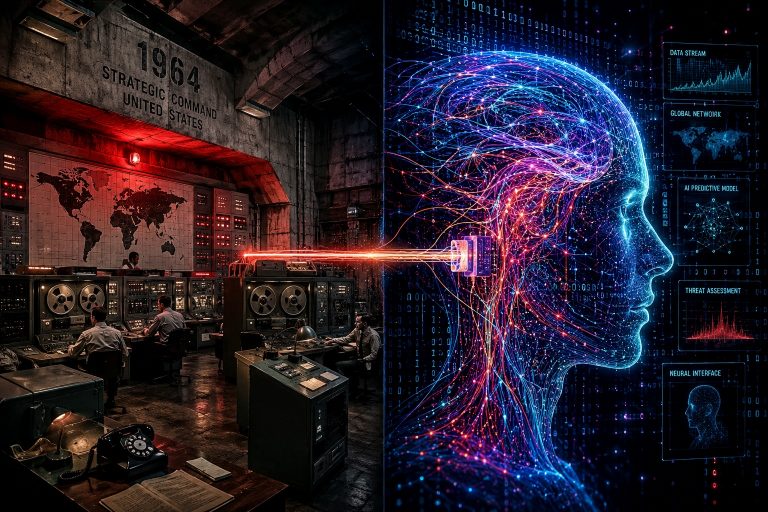
The answer lies in System Architecture.
When Google conducted a massive, multi-year study (Project Aristotle) to find out what made their most successful teams tick, they didn’t find that it was a collection of the smartest individuals. The secret ingredient was Psychological Safety—a systemic environment where team members knew they would not be punished, ridiculed, or cast out for making a mistake. When the environment guarantees safety, the human brain switches off its “fight-or-flight” amygdala and opens up its capacity for deep connection and empathy.
We see this historically in leaders like Emperor Ashoka. He began his reign as a brutal conqueror, bathing the battlefields of Kalinga in blood. But when he realized the horror of the system he was feeding, he didn’t just tell his people to “be nicer.” He changed the infrastructure of ancient India. He built free hospitals, dug wells along trade routes to reduce environmental physical stress, and carved a transparent code of ethics onto massive public stone pillars. He re-engineered the environment to make peace the logical choice.
The Burden on the Creators
Humans are adaptive chameleons. Put a good person in a cage governed by ruthless, zero-sum laws, and they will eventually show their teeth to stay alive. Put that same person in an environment built on transparency, safety, and shared purpose, and they are capable of breathtaking collaboration.
If you are a leader, a CEO, a teacher, a politician, or a parent, you are not just a manager of people. You are a system architect.
If your team is hoarding information, if your classroom is filled with anxiety, or if your community is fracturing, stop looking at individual flaws. Look at the blueprint of the house you built.
We cannot simply wish for a more compassionate world. We have to actively build the frameworks that make compassion a safe and logical choice. When we realize that we hold the blueprints to human behavior, we hold the power to turn potential tyrants into lifelong collaborators.