
Beyond the Code: Architecting “Impossible” Solutions with AI and Cross-Domain Prompting
Introduction
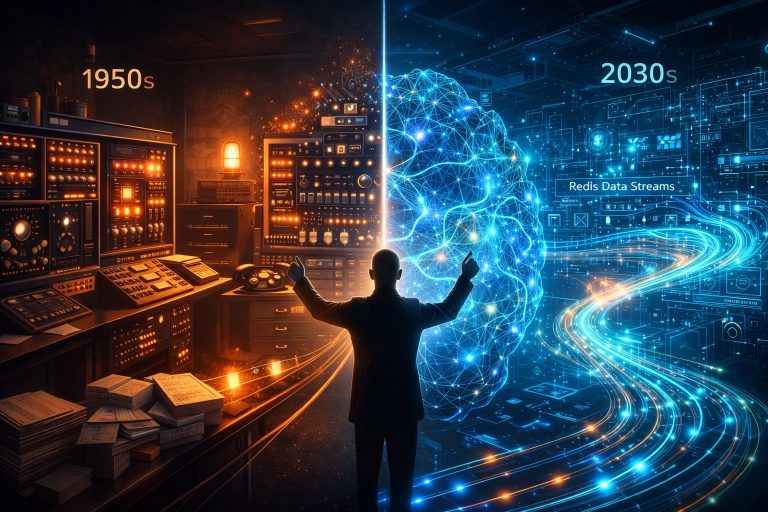
The world of software development is undergoing a seismic shift. The era of “just coding” – focusing solely on syntax, libraries, and direct problem-solving – is fading. Today, we stand on the precipice of a new paradigm, one where the developer’s role is evolving from a mere coder to an AI Architect, a director of massive linguistic and computational intelligence. This shift demands more than just a passing familiarity with Large Language Models (LLMs) like GPT-5 or Claude 4.
The difference in outcomes when interacting with these AI tools is stark and is fundamentally linked to how we prompt them. A “hobbyist” prompt – direct, simple, and lacking deep context – often results in functional but flawed code, generating hidden technical debt. In contrast, an “architect” prompt – rich in context, domain knowledge, and clear instructions – constructs robust, scalable, and innovative systems.
We are not just writing lines of code anymore; we are guiding an intelligence that has ingested a significant portion of human knowledge. The challenge is no longer just how to implement a solution but how to communicate the desired solution to this powerful entity. If you treat AI like a junior developer, giving it simple tasks, it will perform like one, often missing edge cases, security vulnerabilities, and optimal architecture.
The hook for this new era of development lies in conquering “unknown territory” – those novel, complex software problems that don’t have existing recipes on Stack Overflow. This requires a different kind of thinking, one that draws parallels from other well-established disciplines like Mathematics, Physics, and Biology.
The Science of the “Persona”
To understand why a simple prompt fails and a complex one succeeds, we must understand how LLMs represent and access knowledge.
The Latent Space Map: Visualizing AI Knowledge
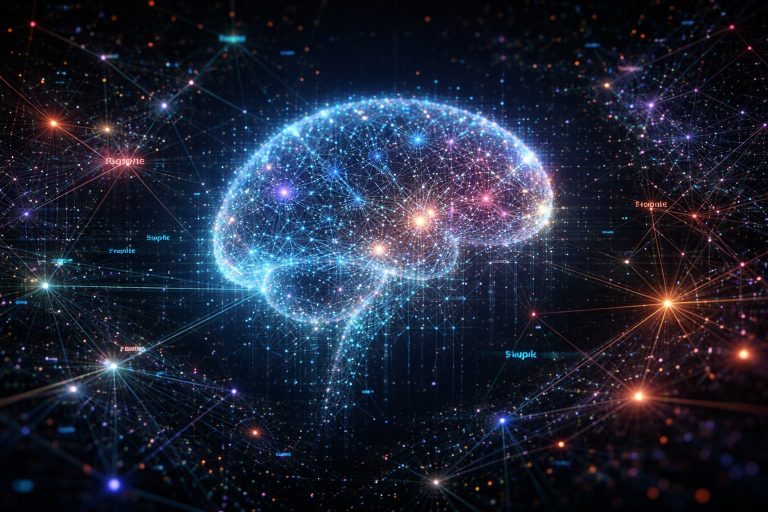
Imagine the LLM’s vast body of training data as a multi-dimensional map, known as “latent space.” In this space, concepts are represented as coordinates, with related ideas clustered together. A general request like “Write a function to process data” lands the AI in a generic “Programming” neighborhood. A “Hobbyist” prompt might land it near “Quick Implementation” or “Beginner Tutorials.” This yields code that works but lacks sophistication.
An “Architect” prompt, however, uses specific, rich language to move the AI into a different neighborhood – “Senior Architect,” “Secure Coding Practices,” or “Performance Optimization.” The vocabulary you use acts as a precise coordinate system.
The Attention Mechanism: Keywords as Navigation Tools
Large Language Models use an “attention mechanism” to determine which parts of a prompt are most important. Specific keyword pulls the AI’s “focus” towards relevant areas of its latent space. For instance, using words like “Entropy” signals the need for concepts from information theory and randomness. Specifying “Security Engineer Persona” tells the AI to prioritize vulnerability assessment, input validation, and secure cryptographic practices. Each targeted keyword acts as a coordinate, moving the AI into a “zone” within its knowledge graph.
Elastic Intelligence: Modulating AI “IQ” with Constraints
A powerful and non-intuitive aspect of LLMs is that their perceived intelligence or “IQ” is not fixed; it’s elastic. It changes based on the constraints you provide. When you ask a generic question, the AI provides a general, sometimes lukewarm, response. But when you bind the problem with clear, specific constraints – e.g., “Implement a secure calculator in Python using only standard libraries, ensuring no use of eval(), using floating-point math precisely, and handling all possible user errors elegantly, from a Senior Security Engineer’s perspective” – you force the AI to recruit and synthesize a much wider and deeper array of its knowledge. The AI’s responses become more sophisticated as the complexity of the requirements increases. This is “Elastic Intelligence” in action.
The Architect vs. The Hobbyist – The Calculator Experiment
Let’s illustrate this with a simple but profound example: a calculator function.
The Hobbyist Approach: Speed over Safety
A hobbyist might prompt: “Create a simple calculator in Python that can add, subtract, multiply, and divide.”
The AI, recognizing the simplicity, will likely use the quickest path, possibly leading to a solution using eval(), a notorious security hole. It might not robustly handle floating-point errors (e.g., 0.1 + 0.2 != 0.3). The focus is purely on functional completion. This code is functional but creates substantial technical debt.
The Architect Approach: Security-first, Modular, and Mathematically Precise
An architect’s prompt would be significantly more deliberate: “Create a robust and secure calculator module in Python. Use a class structure. Use math.fsum for floating-point calculations to avoid common precision errors. Ensure input validation handles non-numeric data gracefully, preventing crashes. Critically, do not use eval() or any other potentially insecure methods. Include unit tests for common operations and edge cases like division by zero.”
The AI, receiving this structured and constrained prompt, activates a “Senior Developer” or “Security Engineer” persona. It focuses on modularity (using a class), security (explicitly avoiding eval()), mathematical correctness (using math.fsum), and reliability (input validation and tests).
The Lesson: Treat AI like a Peer, and it Innovates
The core lesson here is that AI performance is directly proportional to the quality of human guidance. If you treat AI like a junior, it performs like one. If you treat it like a peer – providing context, setting expectations, and defining constraints – you unlock its capacity for innovation and professional-grade output.
Navigating “Unknown Territory”
This is where things get really exciting. How do we solve problems that have no established software precedents? We look to other, more mature fields of study – disciplines that have wrestled with complex systems and optimization for centuries or millennia. This is the power of cross-domain synthesis.
AI, in its ingestion of vast diverse knowledge, has implicit connections between these fields. It can map the underlying mathematical structure of one domain onto the code of another.
The Power of Metaphor and Cross-Domain Prompting
Prompting with a metaphor from another field can dramatically shift the AI’s perspective and unlock novel solutions. It allows us to leverage the AI’s existing knowledge of systems thinking from non-programming fields.
Case Study 1: The “Biological” Load Balancer (Ant Colony Optimization)
Imagine designing a distributed system facing unpredictable traffic bursts. Traditional load balancing might be insufficient. We can prompt the AI with a biological metaphor: “Design a load balancing algorithm for a distributed system, inspired by how ants find food.”
This prompt forces the AI to access knowledge about “Ant Colony Optimization” – a method where simulated ants lay “pheromones” on a path, with stronger pheromones indicating a faster or more abundant source. Over time, pheromones “evaporate.”
The AI can map this biological process to a software solution:
- Pheromones: A metric representing the “quality” of a server path (e.g., low latency, low resource usage). When a request is successfully handled, the pheromone level for that path increases.
- Evaporation: Pheromone levels naturally decay over time, preventing old data from dominating new traffic patterns.
- Path Selection: Incoming requests are routed proportionally to the pheromone strength of available paths.
This creates a highly adaptive, decentralized, and resilient load balancer, far superior to simple Round Robin for highly variable workloads.
Case Study 2: The “Structural” Database (Cantilever Physics)
Suppose you’re designing a database for high-performance reading and writing. You want to avoid one operation starving the other. We can look to physics and structural engineering for inspiration.
Prompt: “Architect a database storage engine using concepts from structural engineering. Specifically, think about how a cantilever handles load and torque, to balance intense read operations against intensive write operations.”
This prompt pushes the AI to apply concepts from structural mechanics:
- Load: Can be mapped to the pressure of incoming write requests.
- Torque: The rotational force, which can be seen as the potential to disrupt the database state and cause data corruption or inconsistencies.
- The Cantilever (the database structure): It must be rigid enough to handle the torque (data integrity) while distributing the load effectively (write throughput).
The AI might propose a structure with distinct “zones” for reads and writes, perhaps using a structure similar to Log-Structured Merge (LSM) trees but optimized based on this physical metaphor. The primary log becomes the rigid structure (handling writes/load), while reads can be optimized from secondary indices (the free end of the cantilever). This perspective ensures the design intrinsically accounts for the trade-off between structural stability (data integrity) and capacity (performance).
Why it Works: AI as a Mathematical Map
This cross-domain synthesis isn’t magic; it’s math. Large Language Models are, at their core, incredible mathematical mappings of human language. When we provide a physics or biology metaphor, we are not just giving it a story; we are providing a structural template – a mathematical invariant. The AI understands the mathematics of how information spreads in an ant colony or how forces balance in a cantilever, and it can map that same mathematical structure onto code.
Applying cross domain concepts to software problems
Some cross-domain concepts are so powerful that they can be applied universally across many software problems. Entropy and Fractals are two of these “universal hammers.”
Shannon Entropy and Cybersecurity
Shannon Entropy, from information theory, measures randomness or unpredictability. High entropy indicates high unpredictability. We can use this mathematical concept to detect potential cyber-attacks.
The prompt would look something like: “Develop a real-time intrusion detection system (IDS). It should analyze the content of incoming network packets and flag those with high Shannon Entropy, which can indicate encrypted or compressed data often associated with exfiltration attempts or command-and-control communication.”
The AI, accessing its knowledge of information theory, understands that normal user traffic (like HTML) has lower, more structured entropy, while unexpected encrypted streams or compressed data dumps would appear as spikes in entropy. This provides an elegant, math-based security tool.
Fractal Geometry and Infinite UI Scalability
Fractals are geometric patterns that are self-similar across different scales – small parts look like the whole structure. This recursive, infinite nature can be applied to build scalable UI components.
Prompt: “Architect a user interface (UI) library for a complex, data-heavy dashboard. Use principles from fractal geometry and recursion. Every component, from a small data cell to the main window, should be built using the same fundamental, self-similar patterns.”
The AI would design a system where a single base Component class can be recursively composed. A table cell is a primitive Component, a row is a Component of cells, a table is a Component of rows, and the whole dashboard is a Componentof tables and other structures. This recursive approach makes the UI infinitely scalable, easy to reason about, and highly consistent.
Generalization: Math Solves the Unseen
The powerful takeaway is that mathematics allows AI to generalize and solve problems it has never seen before by focusing on “invariants.” By connecting a novel software problem to a fundamental mathematical concept (entropy, fractals, pheromone decay, cantilever physics), you are providing the AI with a template for solving any problem that shares that same fundamental mathematical structure.
Verification: The Human “Laboratory”
While AI can propose groundbreaking solutions, it cannot replace human judgment. The “trust but verify” principle is crucial, making the human developer the final quality gate. This requires a robust verification framework.
Logic Translation: Does the Metaphor Hold?
First, verify that the mapping from the non-software domain actually makes sense. Does the “ant” analogy for a load balancer truly improve performance? Does the “cantilever” concept effectively separate read/write pressure? The human architect must rigorously validate the conceptual integrity.
Simulation: Benchmarking “Metaphor-Code”
Do not trust theoretical correctness alone. We must simulate and benchmark. Build prototypes. Run A/B tests. Compare the AI-generated “metaphor-based” code against standard, well-established methods. If the “Ant Colony Load Balancer” performs worse than a simple standard algorithm, the metaphor failed to deliver tangible value. Verification requires data.
Boundary Testing: Finding the Breaking Point
The human is also responsible for finding the “breaking point” of the abstraction. Every metaphor and architectural design has limits. Under what conditions does the “ant” algorithm fail? When does the “fractal UI” become unperformant or overly complex? Rigorous edge-case testing is critical to identify the limits of the AI’s proposed solution.
Conclusion
The most powerful developers of the future won’t just be skilled in a particular programming language’s syntax. They will be Systems Thinkers, able to step back, understand the deep structure of a problem, and connect it to patterns from diverse fields. They will be able to communicate with AI at a profound level.
The era of “just coding” is over. A new, more exciting era of system synthesis has begun. To solve what seems like an impossible software problem, stop looking just at the code on your screen, and start looking at the universe.